LAUSD Coffee Cake Recipe (The Original 1954 Recipe)

This is the actual LAUSD Coffee Cake Recipe, straight from the original 1954 card, so it’s not a reconstructed guess or a modern reinterpretation. If you grew up eating this cake in a Los Angeles cafeteria, this is the real recipe behind it.
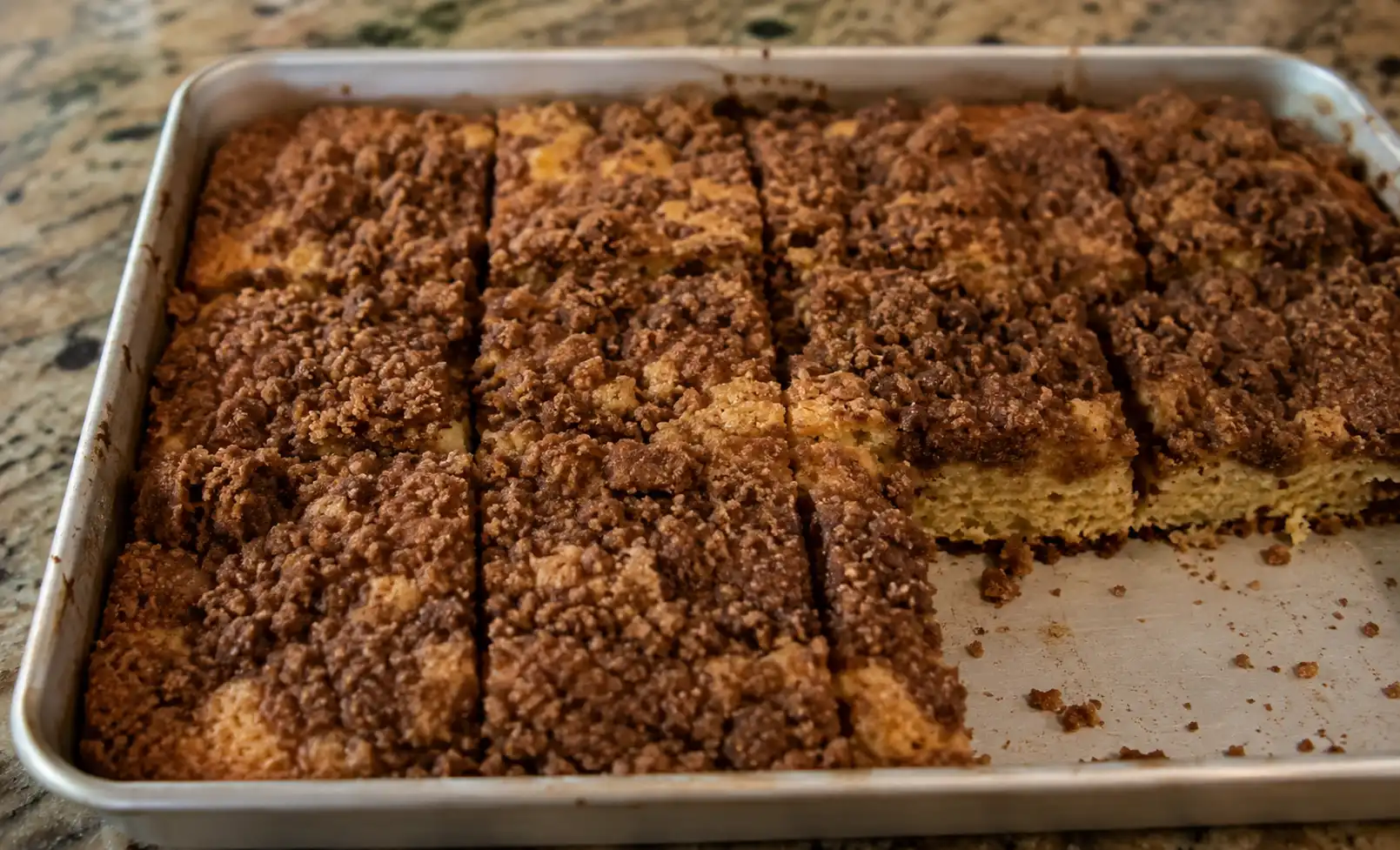
It’s simple, and it’s a little unusual by today’s standards, and that’s exactly why it’s stayed in people’s memories for over 70 years.
About the LAUSD Coffee Cake Recipe – The Original 1954 Version
This recipe dates back to 1954, and it was part of LAUSD’s official cafeteria recipe collection from the start. The card became public when then-Superintendent Austin Beutner shared it, and it’s been passed around and recreated ever since.
At its peak, LAUSD’s cafeterias were turning out millions of servings of this cake every year, so it’s fair to say this is one of the most-eaten cakes in Los Angeles history.
One honest note before you bake it: today’s cafeteria version reportedly comes from a custom cake mix now, not this scratch recipe. So what you’re making here is the historical original, and it may not match exactly what’s served in schools today.
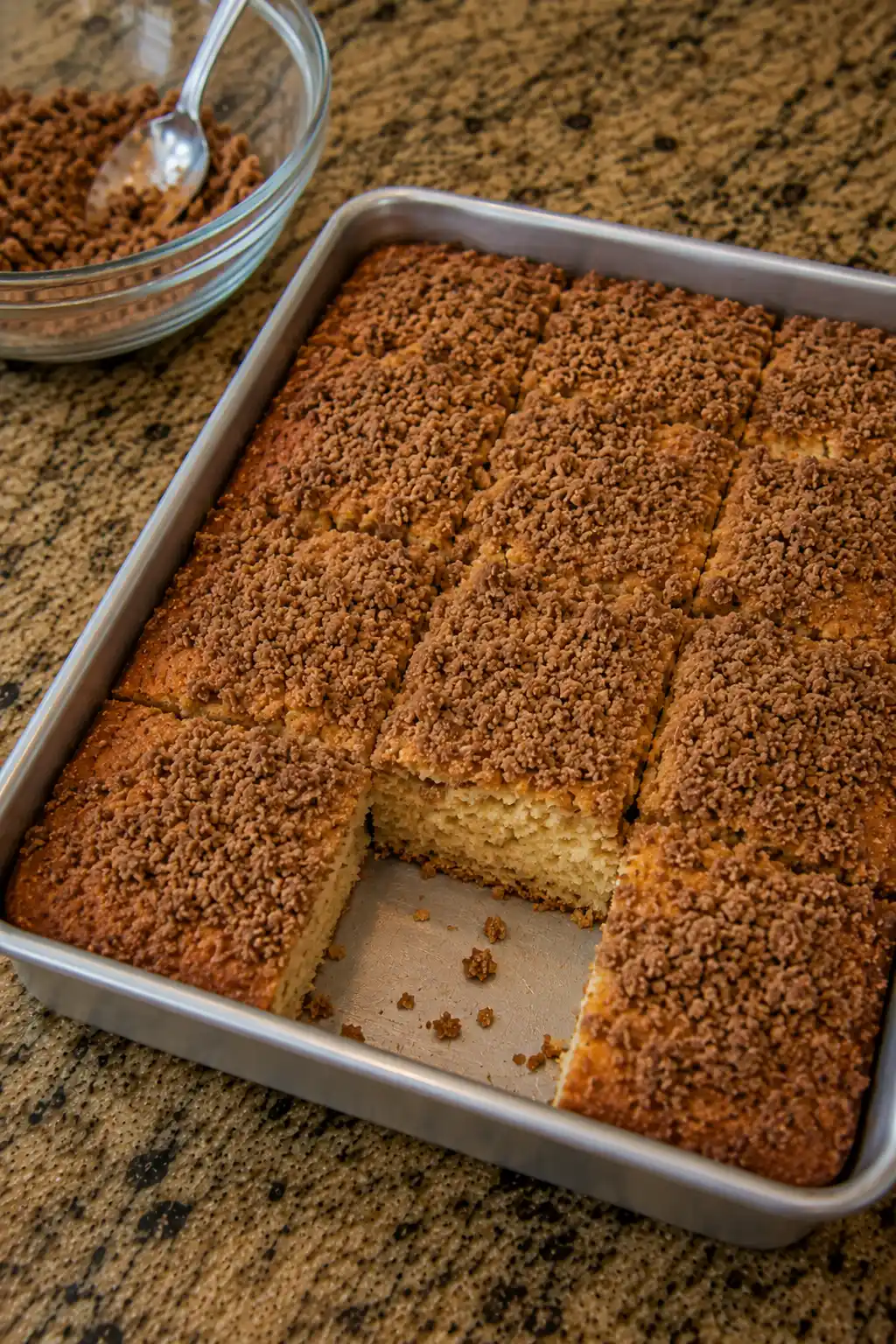
A Note on 1950s Ingredient Names
The original card uses a couple of terms you won’t see much anymore, so here’s what they actually mean.
“Salad oil” is just the 1950s way of saying vegetable oil, and that’s exactly what you’ll use here. “Bakers’ Flour” refers to a slightly different flour than what most home bakers keep on hand, but regular all-purpose flour works fine in its place, and that’s what this recipe calls for below.
What You’ll Need
- All-purpose flour — this is the base for both the cake and the crumb topping
- Brown sugar and granulated sugar — these bring the sweetness, and the brown sugar adds a little extra richness
- Salt — this balances out the sweetness
- Nutmeg — this is the ingredient that makes the flavor stand out, and it’s original to the recipe, not a modern add-in
- Vegetable oil — this replaces butter entirely, and it’s what gives the cake its tender, moist crumb
- Cinnamon — this gets stirred into the reserved crumb mixture to make the topping
- Baking soda and baking powder — both work together for lift
- Egg — this binds everything together
- Buttermilk — this adds moisture and a light tang
No baker’s flour on hand? Regular all-purpose flour is the modern substitute, and it’s what most people use today anyway. Want to try butter instead of oil? Some people do, and it works, but it moves the cake away from the light, tender texture the original oil-based version is known for.
Equipment You’ll Need
You only need three things for this one, and there’s a good chance you already have all of them.
- A large mixing bowl, and a small bowl for the topping
- A rubber spatula or a fork
- A 9″ x 13″ cake pan
How to Make the Original LAUSD Coffee Cake
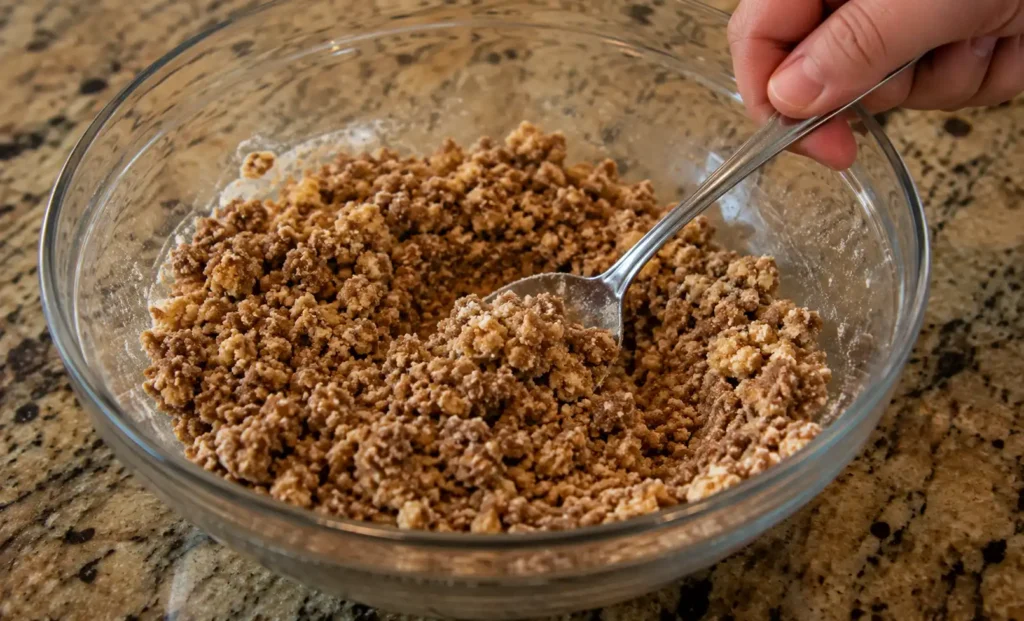
1. Make the crumb base. Combine the flour, brown sugar, granulated sugar, salt, nutmeg, and oil in a large bowl, and mix until it looks crumbly, like a streusel before it’s baked.
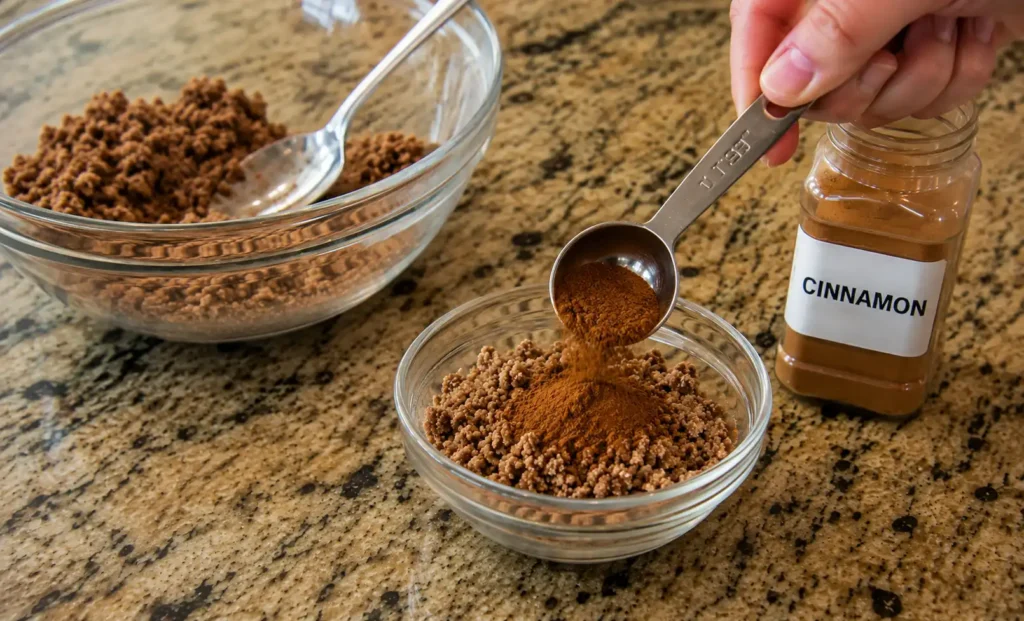
2. Set aside the topping. Reserve ½ cup of that crumb mixture in a small bowl, and stir the cinnamon into it. This reserved portion is your topping, so set it aside for now.
3. Finish the batter. Go back to the large bowl with the remaining crumb mixture, and add the baking soda, baking powder, egg, and buttermilk. Blend everything together, but don’t over-mix, since the original card is specific about this, and overmixing is exactly what turns a tender cake into a dense one.
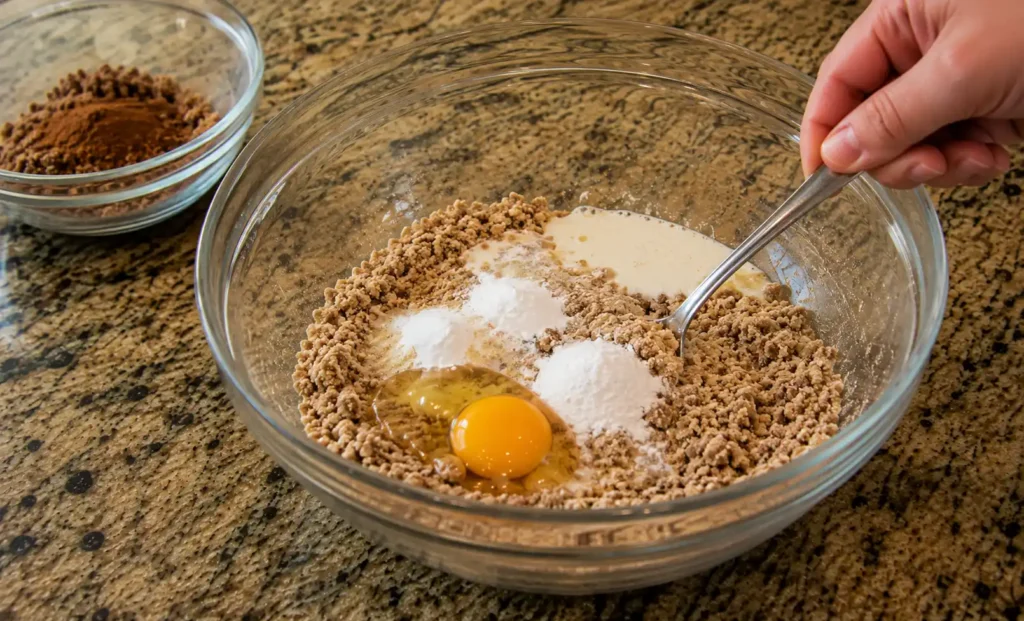
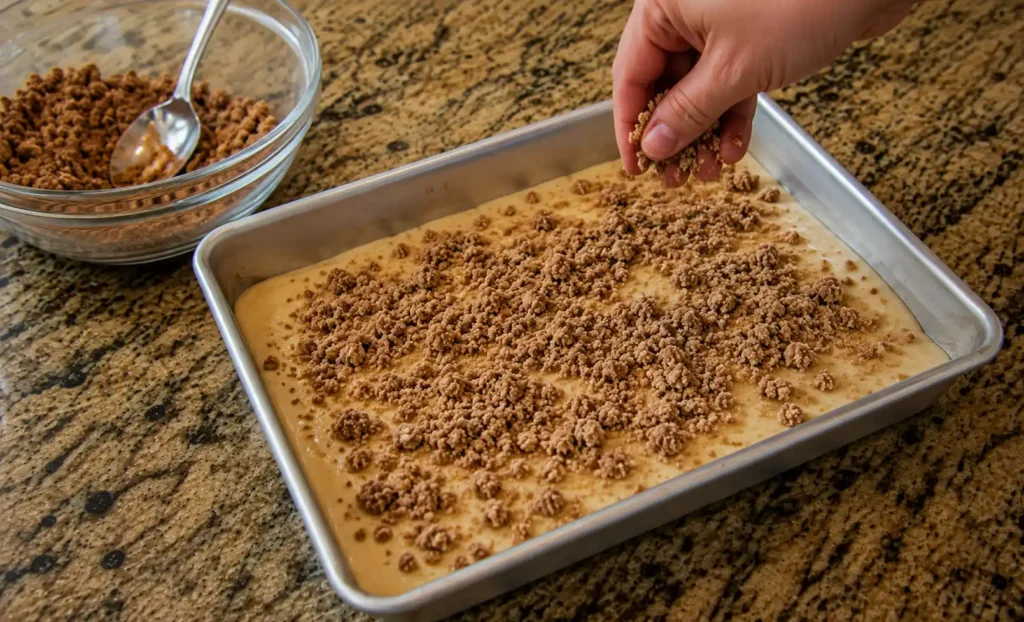
4. Pan and top. Pour the batter into a greased 9″ x 13″ cake pan, and then sprinkle the reserved cinnamon crumb topping evenly over the top.
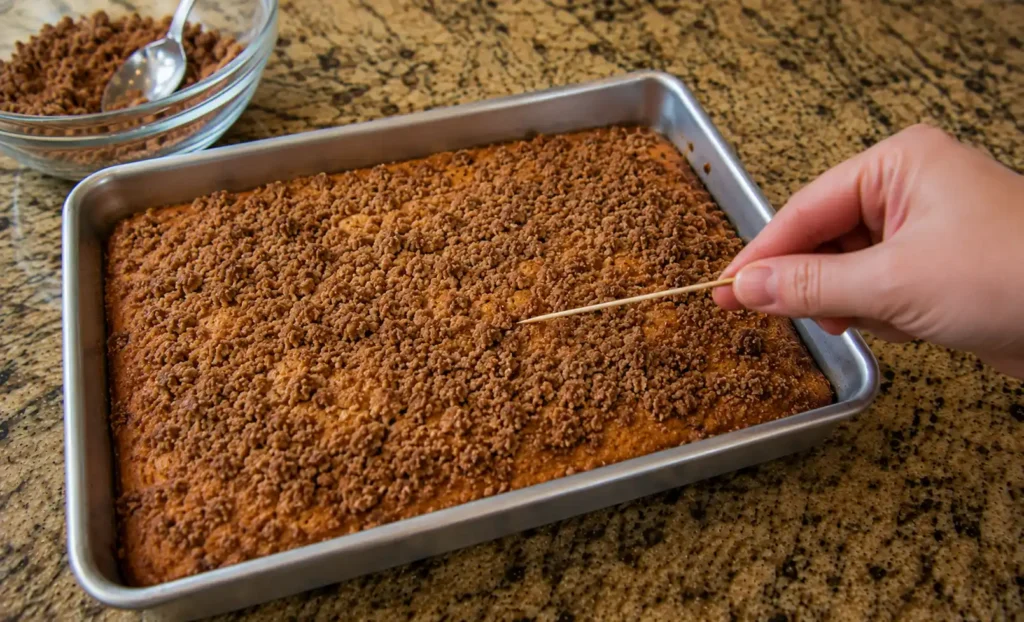
5. Bake. Bake at 350°F for 25 to 30 minutes. The original card lists a range of 350° to 375°, likely so cafeteria cooks could bake it alongside whatever else was in the oven, but 350°F is the safe, standard choice for a home oven. Check doneness with a toothpick in the center, and it should come out clean, with no wet batter attached.
LAUSD Coffee Cake Recipe
Estimated Cost: $5–$7
The verified original LAUSD cafeteria coffee cake, made from the actual 1954 recipe card - a tender, oil-based cake with a nutmeg-spiced crumb and cinnamon streusel topping.
INSTRUCTIONS
- Combine flour, brown sugar, granulated sugar, salt, nutmeg, and oil in a large bowl. Mix until crumbly.
- Reserve ½ cup of the mixture in a small bowl, and stir in the cinnamon. Set aside as the topping.
- Add baking soda, baking powder, egg, and buttermilk to the remaining crumb mixture. Blend together without over-mixing.
- Pour batter into a greased 9" x 13" cake pan.
- Sprinkle the reserved cinnamon crumb topping evenly over the batter.
- Bake at 350°F for 25 to 30 minutes, until a toothpick inserted in the center comes out clean.
RECIPE NOTES
"Bakers' Flour" and "salad oil" are 1950s terms — regular all-purpose flour and vegetable oil are the modern equivalents used above. Don't over-mix the batter, and let the cake cool completely before cutting, for the best texture. Store at room temperature up to 3 days, refrigerated up to a week, or frozen up to 3 months.
Recipe Tips
- Don't overmix the batter, since that's the single biggest reason this cake turns out dense instead of tender. Use fresh nutmeg if you can, because it makes a real difference in how bright the flavor comes through. And let the cake cool completely in the pan before you cut it, since slicing it too soon is how it ends up crumbling instead of holding together in neat squares.
NUTRITION FACTS
Approximately 220–260 calories per square, based on a 12–15 slice pan. This is a general estimate based on the ingredient list, since no specific nutrition data exists for this recipe, including on the original card itself.
Tips for a Better Result
Don’t overmix the batter, since that’s the single biggest reason this cake turns out dense instead of tender. Use fresh nutmeg if you can, because it makes a real difference in how bright the flavor comes through. And let the cake cool completely in the pan before you cut it, since slicing it too soon is how it ends up crumbling instead of holding together in neat squares.
How This Compares to Today’s Cafeteria Version
If you’re baking this hoping it tastes exactly like what’s served in LAUSD schools right now, it’s worth knowing the difference. Today’s cafeteria version reportedly comes from a custom cake mix, so what you’re making here is the real, historical original instead.
Taste memory is personal, and everyone remembers “the coffee cake” a little differently, so I won’t promise this matches your exact memory bite for bite. What I can tell you is that this recipe gets you as close to the original source as it’s possible to get, since it comes straight from the actual 1954 card.
What to Serve It With
This cake is traditionally served with coffee, tea, or milk, the same way it was in the cafeteria. It’s meant to be eaten at room temperature, cooled and cut into neat squares, so you don’t need to warm it up before serving.
Storage
Store the cake at room temperature in an airtight container, and it’ll stay fresh for up to 3 days. If you want it to last longer, refrigerate it tightly covered, and it’ll keep for up to about a week. For anything beyond that, wrap individual slices well and freeze them, and they’ll hold up for up to 3 months.
Frequently Asked Questions
Yes. This recipe comes directly from the actual 1954 LAUSD recipe card, not a reconstructed guess.
Those are 1950s terms. Salad oil means vegetable oil, and Bakers’ Flour refers to a slightly different flour than standard all-purpose, which works fine as a substitute and is what this recipe uses.
It’s original to the recipe, not something added later, and it’s a defining part of the cake’s flavor.
It might not taste exactly the same, since today’s cafeteria version reportedly comes from a custom cake mix. This recipe recreates the original scratch version instead.
You can, and some people prefer it, but it changes the texture from the light, tender crumb the original oil-based recipe is known for.
Let it cool completely in the pan before slicing, since cutting it warm is the main reason it crumbles instead of holding its shape.
Room temperature in an airtight container for up to 3 days, refrigerated for up to a week, or frozen for up to 3 months.